

The 40-Year Mortgage: How My Client's "Low Payment" Loan Became a Generational Curse
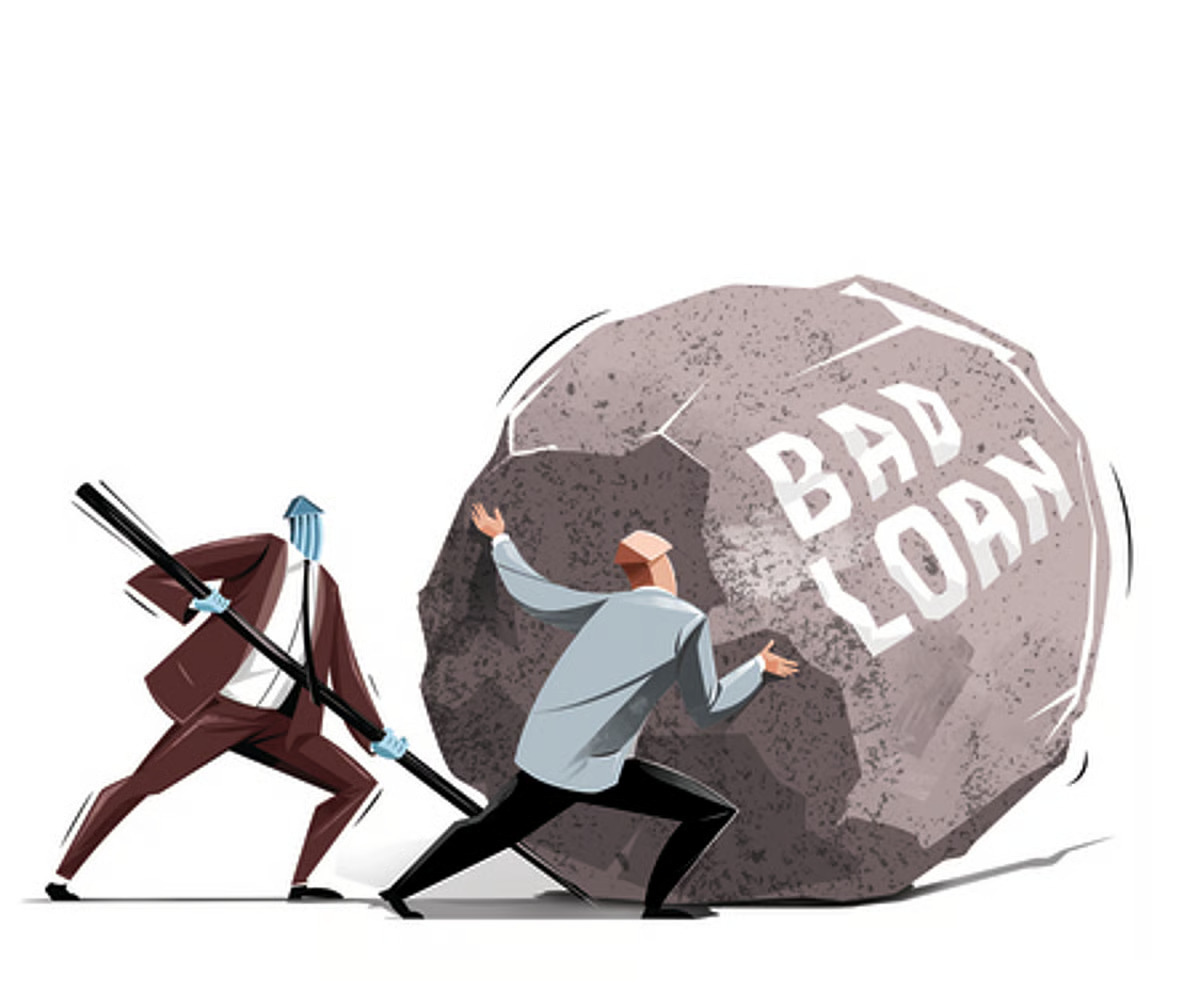
The 40-Year Mortgage: How My Client's "Low Payment" Loan Became a Generational Curse
When Patricia walked into National Mortgage Home Loans, she had the strangest look on her face—part confusion, part horror, part disbelief.
"I need you to explain something to me," she said, sliding a folder across my desk. "I've been paying my mortgage for 12 years. Twelve years of never missing a payment. And according to this statement, I owe MORE now than when I started."
I opened the folder and immediately recognized what I was looking at: a payment option ARM (adjustable-rate mortgage) with negative amortization.
"Patricia, who put you in this loan?"
"My loan officer in 2013. He said it was perfect for me—I could choose my payment each month, and it started really low. He said I could 'make it work with my budget' and refinance in a few years when my income went up."
I pulled up her loan documents in our system. What I found was even worse than I expected.
Patricia's loan in 2013:
- Original loan amount: $285,000
- Interest rate: Started at 2.75%, adjusted annually
- Payment options: Minimum, interest-only, or fully amortizing
- Minimum payment for first year: $893/month
Patricia's loan in 2025:
- Current balance: $347,892
- Current interest rate: 7.125% (after multiple adjustments)
- Minimum payment option: $2,847/month (no longer available—loan recasted after balance grew 25%)
- Required payment: $3,142/month
- She now owes $62,892 MORE than she originally borrowed, despite 12 years of payments
Patricia had chosen the minimum payment for the first eight years because it fit her budget. What she didn't understand was that the minimum payment didn't even cover the interest due. The unpaid interest was being added to her principal balance every month.
She had been paying her loan backwards for eight years.
By the time her loan recasted (when the balance grew 25% beyond the original amount, the lender automatically recasts it to a fully amortizing payment), Patricia's payment exploded from $893 to $3,142—a 252% increase.
She'd been barely scraping by on the $893 payment. The $3,142 payment was destroying her financially. She'd maxed out credit cards trying to keep up, depleted her retirement savings, and was two months behind when she finally sought help.
"How is this even legal?" she asked me, tears forming.
"Unfortunately, it is legal. These loans existed to give borrowers 'flexibility.' But they were sold to people who didn't understand what they were signing, and they've destroyed countless families financially."
Patricia's story is the most extreme bad loan case I've personally handled, but it represents a category of predatory and dangerous loan products that still exist in various forms today.
This blog isn't about ARMs (we covered those). It's not about interest-only loans (covered that too). This is about loan structures so fundamentally flawed that they should never exist—but do—and how to recognize them before they trap you.
At National Mortgage Home Loans, we refuse to originate certain loan types even though they're legal and even though we could make money on them. Because some loans are so bad for borrowers that offering them violates our ethics, regardless of legality.
Let's talk about the loan structures that destroy financial lives and how to avoid them.
The Payment Option ARM: Financial Engineering Gone Wrong
Patricia's loan was a payment option ARM—a product that became notorious during the 2008 housing crisis but still exists in modified forms.
Get Your Free Homebuyer's Guide
Our most popular resource — a step-by-step guide covering everything from credit preparation to closing day.
- Pre-approval checklist
- Down payment strategies
- Closing cost breakdown
- Expert negotiation tips
How It Works (And Why It's Terrible):
Each month, you choose from multiple payment options:
Option 1: Minimum Payment (usually 1-2% of the loan balance)
- Covers only a fraction of the interest due
- Unpaid interest is added to your loan balance
- Your loan grows every month you make this payment
- You're literally paying your loan backwards
Option 2: Interest-Only Payment
- Covers the full interest due but no principal
- Your balance stays flat
- You build zero equity through payments
Option 3: Fully Amortizing Payment
- Pays principal and interest
- Gradually pays down your loan
- This is what a normal mortgage does
Option 4: 15-Year Amortizing Payment (sometimes offered)
- Aggressive paydown
- Builds equity quickly
- Usually the highest payment option
The Sales Pitch (The Lie):
"This loan gives you flexibility! In months when money is tight, pay the minimum. When you have extra income, pay more. You're in control!"
The Reality (The Trap):
Human nature ensures most borrowers choose the minimum payment most of the time. If you could comfortably afford the fully amortizing payment, you wouldn't need "flexibility."
So borrowers pay minimum payments for years, watching their balance grow while thinking they're making progress on homeownership.
Then the loan recasts (automatically adjusts when your balance grows 25% or at a specific date—typically 5-10 years), and your payment explodes to force full amortization over the remaining term.
Patricia's payment went from $893 to $3,142—252% increase—overnight.
Why This Loan Structure Is Predatory:
- It preys on wishful thinking ("My income will increase, so I'll pay more later")
- It hides the true cost (borrowers see the low minimum payment, not the consequences)
- It creates impossible situations (borrowers can't afford the recast payment and can't refinance because they're underwater)
- It generates massive lender profits (from all the negative amortization adding to the loan balance)
These loans should be illegal. They're not. But they should be.
Today's Mortgage Rates
Rates change daily. Get notified when rates drop so you can lock in the best deal.
Patricia's Escape: How We Fixed the Unfixable
Patricia's situation seemed hopeless:
- She owed $347,892 on a home worth $385,000
- Her payment was $3,142 (totally unaffordable)
- Her credit was damaged from recent late payments
- She had no savings left
- She was spiraling toward foreclosure
Here's how we saved her:
Step 1: Loan Modification Attempt
We contacted her current servicer to request a loan modification. After 60 days of documentation and negotiation, they offered:
- Extending the term to 40 years
- Reducing the interest rate slightly to 6.75%
- New payment: $2,687/month
This was better than $3,142, but still unaffordable for Patricia.
Step 2: Strategic Refinancing with Gift Funds
Patricia's parents learned about her situation and offered to help with $25,000 as a gift. Combined with her minimal equity, this allowed us to structure:
- Refinance loan amount: $347,892
- Parent gift funds: $25,000 applied to principal
- New loan balance: $322,892
- New 30-year fixed rate: 6.875%
- New payment: $2,124/month
This was affordable for Patricia. More importantly, it was a normal fixed-rate mortgage with no tricks, no negative amortization, and no recast bombs waiting to explode.
Step 3: Bankruptcy Consideration (Didn't End Up Needed)
We also connected Patricia with a bankruptcy attorney to evaluate Chapter 13 as a backup plan if refinancing failed. Chapter 13 would have allowed her to:
- Strip down the mortgage to the home's value ($385,000)
- Create a payment plan for the deficiency
- Keep the home while restructuring debt
Fortunately, the refinance worked, so bankruptcy wasn't necessary.
Ready to Take the Next Step?
Apply now and get pre-approved today. Our streamlined 5-minute application makes it easy to start your journey toward homeownership.
The Cost of Her Original "Low Payment" Loan:
Over 12 years with the payment option ARM:
- Total payments made: approximately $178,000
- Principal reduction: -$62,892 (NEGATIVE—she paid backwards)
- Interest paid: approximately $240,892
- She paid $240,892 in interest and INCREASED her debt by $62,892
If she'd had a normal 30-year fixed mortgage from day one:
- Total payments over 12 years: approximately $216,000
- Principal reduction: approximately $44,000
- Interest paid: approximately $172,000
- She would have paid $44,000 toward owning her home instead of going $62,892 deeper into debt
The "low payment" loan cost her $106,892 in lost equity compared to a normal mortgage.
Other Dangerous Loan Structures That Still Exist
Payment option ARMs are rare now but not extinct. Here are other loan structures that spell trouble:
The 40-Year Mortgage: Generational Debt
Some lenders offer 40-year mortgage terms instead of the standard 30-year.
The Pitch: "Lower your monthly payment by spreading the loan over 40 years instead of 30!"
The Math on a $400,000 Loan at 6.5%:
30-year mortgage:
- Monthly payment: $2,528
- Total interest paid: $509,680
- Total paid: $909,680
40-year mortgage:
- Monthly payment: $2,323
- Total interest paid: $714,240
- Total paid: $1,114,240
You save $205/month but pay $204,560 more in interest.
Plus, you're still making payments in your 70s if you buy in your 30s. You're passing mortgage debt down generational timelines.
When 40-Year Terms Make Sense: Almost Never
The only scenario where 40-year mortgages are defensible:
- You absolutely need the lower payment to qualify
- You plan to make extra principal payments to shorten the term
- You understand you're paying a massive premium for temporary payment relief
99% of the time, if you need a 40-year term to afford a house, you're buying too much house.
The "Temporary" Buydown That Becomes Permanent Burden
Builders sometimes offer 2-1 buydowns or 3-2-1 buydowns where they pay to temporarily reduce your interest rate:
Example: 2-1 Buydown
- Year 1: 4.5% rate (builder pays the difference to bring 6.5% down to 4.5%)
- Year 2: 5.5% rate (builder subsidizes to bring 6.5% down to 5.5%)
- Years 3-30: 6.5% rate (you pay full rate)
The Pitch: "Lower payments for the first two years while you get settled!"
The Trap: You qualify based on the Year 1-2 lower payment, but in Year 3, your payment jumps to the full rate. If you were already stretching to afford the lower payment, the jump to full rate breaks you.
This is only safe if:
- You can afford the full rate payment from day one
- You view the lower early payments as a bonus, not a necessity
- You have income growth planned that will make Year 3+ payments comfortable
If you're counting on the buydown to make payments affordable, you're setting yourself up for failure when it expires.
The Balloon Mortgage: The Ticking Time Bomb
Balloon mortgages offer low monthly payments for 5-7 years, then the entire remaining balance comes due in one lump sum payment.
Example:
- $350,000 loan
- 7-year balloon term
- Payments calculated on 30-year amortization
- Monthly payment: $2,150 (affordable!)
- After 7 years: $312,000 lump sum payment due
The Assumption: "You'll refinance or sell before the balloon payment comes due."
The Reality:
- What if rates have increased and refinancing is expensive?
- What if your home value has declined and you're underwater?
- What if your credit has deteriorated and you can't qualify to refinance?
- What if life circumstances prevent you from selling?
You're gambling that conditions seven years from now will allow you to refinance or sell. That's a massive gamble with your home as the stakes.
When balloon mortgages make sense: Virtually never for primary residences. Sometimes for sophisticated commercial real estate investors who have concrete exit strategies and backup plans.
The "No Doc" Loan (Still Exists as "Bank Statement" Loans Done Wrong)
During the housing bubble, "no documentation" loans allowed borrowers to state their income without verification. These were disasters, enabling massive fraud and default.
True no-doc loans are gone, but bad lenders still create similar disasters with bank statement programs done incorrectly.
Bank statement loans done right (like at National Mortgage Home Loans):
- Calculate income conservatively from 12-24 months of bank statements
- Verify deposits represent genuine income, not loans or transfers
- Ensure borrower can actually afford the stated income level
- Build in safety margins
Bank statement loans done wrong (predatory lenders):
- Use short timeframes (3-6 months) that can be manipulated
- Don't verify the source of deposits (could be borrowed money)
- Calculate income optimistically (counting one-time windfalls as recurring)
- Push borrowers into loans they can't sustain
The loan product itself isn't bad—it's legitimate for self-employed borrowers. But executed poorly, it recreates the problems of no-doc loans.
The "Crowdfunded Down Payment" Disaster
Some fintech companies now offer to "crowdfund" your down payment—you launch a campaign, friends and family contribute, and you use these funds for your down payment.
Why this is dangerous:
Lenders require down payment funds to be "seasoned" (in your account for 60+ days) or properly documented as gifts with gift letters. Crowdfunded money often doesn't meet these requirements.
If contributors expect repayment (even informally), it's a loan, not a gift. This creates undisclosed debt that violates loan terms and could trigger default if discovered.
You're starting homeownership by asking friends and family for money. If you can't save a down payment independently, can you really afford homeownership's ongoing costs?
This isn't technically a "loan type," but it's a dangerous financial structure that creates problems.
Red Flags: How to Spot a Bad Loan Before You Sign
Here are warning signs that a loan might be predatory or dangerous:
Red Flag #1: "This Loan Is Perfect for Your Budget!"
If a loan officer is emphasizing how the loan "fits your budget" rather than building your budget first and finding the right loan second, they're backwards engineering your approval.
Good process:
- Understand your income, expenses, and goals
- Build a realistic budget
- Find a loan that fits the budget
Bad process:
- Find how much you want to borrow
- Find a loan structure that technically makes it "affordable"
- Ignore whether it's actually sustainable
Red Flag #2: Complexity That Can't Be Explained Simply
If your loan officer can't explain your loan structure in plain English that your grandmother would understand, it's probably too complex and likely hiding problems.
Payment option ARMs, balloons, and exotic structures require complex explanations because they're complex schemes.
Simple loans are simple to explain: "You borrow $X at Y% interest for Z years. Your payment is $A every month for the entire term. The end."
Red Flag #3: "Trust Me, You Can Refinance Before..."
Any loan strategy that requires refinancing at a future date is a loan strategy built on hope, not planning.
- "You can refinance before the ARM adjusts"
- "You can refinance before the balloon payment is due"
- "You can refinance before the buydown expires"
What if you can't refinance? What if rates rise, your home value drops, your income decreases, or your credit deteriorates?
Never take a loan that requires refinancing as part of the core strategy. Only take loans you could afford to keep for the full term if refinancing becomes impossible.
Red Flag #4: Pressure to Close Quickly
"We need to lock this rate today or it's gone!" "This program might not be available next week!" "If you don't sign now, you'll lose the house!"
Legitimate lenders don't use high-pressure tactics. Predatory lenders do because they know that informed, thoughtful borrowers would walk away.
At National Mortgage Home Loans, we encourage borrowers to take time, ask questions, and even get second opinions. We're confident our guidance is sound and our programs are competitive.
Red Flag #5: Focusing on Payment, Not Total Cost
If your loan officer only talks about monthly payment and never discusses:
- Total interest paid over the loan life
- How much goes to principal vs. interest in early years
- Break-even points on costs and fees
- What happens in different scenarios (rate adjustments, recasts, etc.)
They're hiding the true cost from you.
Red Flag #6: "Everyone's Doing This Type of Loan Right Now"
Popularity doesn't equal wisdom. Remember:
- Payment option ARMs were extremely popular in 2005-2007 (then caused massive foreclosures)
- Subprime no-doc loans were everywhere in 2006 (then destroyed the housing market)
- Balloon notes were common in the 1980s (then wiped out countless families)
Just because a loan type is available and popular doesn't mean it's good for you.
The Loans You Should Actually Consider
Not all complex loans are bad. Here are loan types that serve legitimate purposes:
ARMs (If Used Correctly)
Adjustable-rate mortgages can be excellent for borrowers who:
- Absolutely know they'll sell or refinance before adjustment (military with guaranteed relocation, temporary housing, etc.)
- Have the financial capacity to handle payment increases if plans change
- Understand the worst-case scenario and can survive it
ARMs become dangerous when:
- You're counting on refinancing (hope, not plan)
- You can barely afford the initial payment (no cushion for increases)
- You don't understand how the adjustments work
Interest-Only (For Sophisticated Investors)
Interest-only mortgages can work for real estate investors or high-net-worth individuals who:
- Have investment opportunities returning more than the mortgage rate
- Maintain strict financial discipline
- Have reserves to handle the payment increase when I/O period ends
- Understand they're not building equity through payments
Interest-only becomes dangerous for:
- Primary residence buyers who "just want a lower payment"
- Anyone who doesn't have a concrete plan for the principal
- Borrowers who don't understand the payment increase coming
Jumbo Loans with Temporarily Reduced Rates
Some jumbo programs offer slightly reduced rates for the first 3-5 years, then adjust to a fixed rate for the remaining term.
These work if:
- The post-adjustment rate is clearly disclosed and affordable
- You're prepared for the adjustment
- The initial savings are meaningful
These are dangerous if:
- The adjusted rate isn't clearly explained
- You're qualifying based only on the initial rate
- The adjustment will break your budget
Patricia's Message to Other Borrowers
I asked Patricia if she'd be willing to share her story to help others avoid her mistake. She agreed immediately:
"I want people to understand that the loan officer who put me in that payment option ARM seemed nice, professional, and trustworthy. He wasn't some obvious scammer in a dark alley. He worked for a legitimate company, had a nice office, and seemed to genuinely want to help me.
"But he was either completely incompetent and didn't understand the loan he was selling, or he knew exactly what he was doing and didn't care because he got paid either way.
"I signed papers I didn't understand because I trusted him when he said it was 'perfect for my budget.' I saw the low payment and thought I was getting a great deal.
"Twelve years later, I owe more than I started with, I've destroyed my credit, I've depleted my retirement, and I almost lost my home. That 'perfect' loan nearly destroyed my life.
"Please, PLEASE don't sign anything you don't completely understand. If the loan officer can't explain it simply, don't sign it. If it seems too good to be true, it probably is. And if you have any doubt, get a second opinion from someone who won't benefit from you signing.
"I wish I had."
Work with Lenders Who Put Your Interests First
At National Mortgage Home Loans, we have a simple rule: If we wouldn't put our own family members in a loan, we won't put you in it either.
This means we:
❌ Don't offer payment option ARMs ❌ Don't push 40-year mortgages except in rare circumstances with full disclosure ❌ Don't use high-pressure tactics ❌ Don't focus solely on payments while hiding total costs ❌ Don't structure loans that require refinancing as part of the core strategy
✅ Explain loan structures in plain English ✅ Show you total cost, not just monthly payment ✅ Run worst-case scenarios so you understand risks ✅ Encourage questions and second opinions ✅ Build sustainable loans you'll still be happy with in 10 years
Your loan should build wealth, not destroy it.
If you're considering a mortgage and want honest guidance from professionals who will tell you the truth even when it costs us a deal, contact National Mortgage Home Loans.
We'll review any loan you're considering, explain what you're actually signing, show you the long-term implications, and recommend alternatives if what you're being offered is problematic.
We speak your language: Hablamos español | نتحدث العربية (Arabic) | ܡܡܠܠܝܢܢ ܟܠܕܝܐ (Chaldean Aramaic) | ܡܡܠܠܝܢܢ ܐܬܘܪܝܐ (Assyrian) | Flasim shqip (Albanian)
Visit www.nmhl.us or call us today.
Don't let a "perfect for your budget" loan become a generational curse for your family.
"The most expensive loans are the ones with the lowest initial payments. If it sounds too good to be true, it's probably too bad to be real."